Exercise balls, also known as stability balls or Swiss balls, are a versatile piece of equipment that can be used for a wide range of exercises to improve balance, core strength, and flexibility. Choosing the right size exercise ball is crucial to ensure you get the most out of your workouts and prevent injury. Here is a guide to help you determine the correct size for your needs.
When selecting an exercise ball, it’s important to consider your height as a key factor in determining the right size. Here is a general guideline to help you choose the appropriate size based on your height:
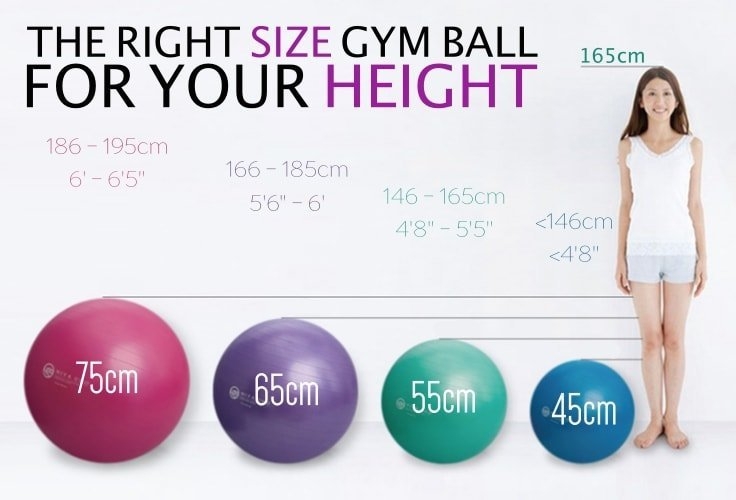
1. Under 5’0″: 45cm exercise ball
2. 5’1″ – 5’7″: 55cm exercise ball
3. 5’8″ – 6’2″: 65cm exercise ball
4. Over 6’2″: 75cm exercise ball
It’s important to note that these are just general recommendations, and you may need to adjust based on your individual preferences and comfort level. Some people prefer a slightly larger or smaller ball depending on their specific workout needs.
When sitting on the exercise ball, your knees should be at a 90-degree angle with your thighs parallel to the floor. This position ensures proper alignment and stability while performing exercises. If your knees are higher than your hips, the ball may be too small, and if your knees are lower, the ball may be too large.
It’s also essential to consider the weight limit of the exercise ball. Most standard exercise balls have a weight capacity of around 300-400 pounds, but be sure to check the manufacturer’s guidelines to ensure you select a ball that can safely support your weight.
Overall, choosing the right size exercise ball is crucial for maximizing the effectiveness of your workouts and preventing injury. By following this size chart and considering your height and weight, you can select the perfect exercise ball to fit your needs and fitness goals.
Remember to consult with a fitness professional or physical therapist if you have any concerns or questions about selecting the right exercise ball size for your specific needs.