Choosing low glycemic index (GI) foods can have numerous health benefits, especially for individuals looking to manage their blood sugar levels. Foods with a low GI value are digested more slowly, leading to a gradual rise in blood glucose levels. This can help prevent spikes in blood sugar and promote better overall health.
Incorporating low GI foods into your diet can also help with weight management, as they can help you feel full for longer periods of time. Additionally, these foods can aid in reducing the risk of chronic diseases such as diabetes, heart disease, and obesity.
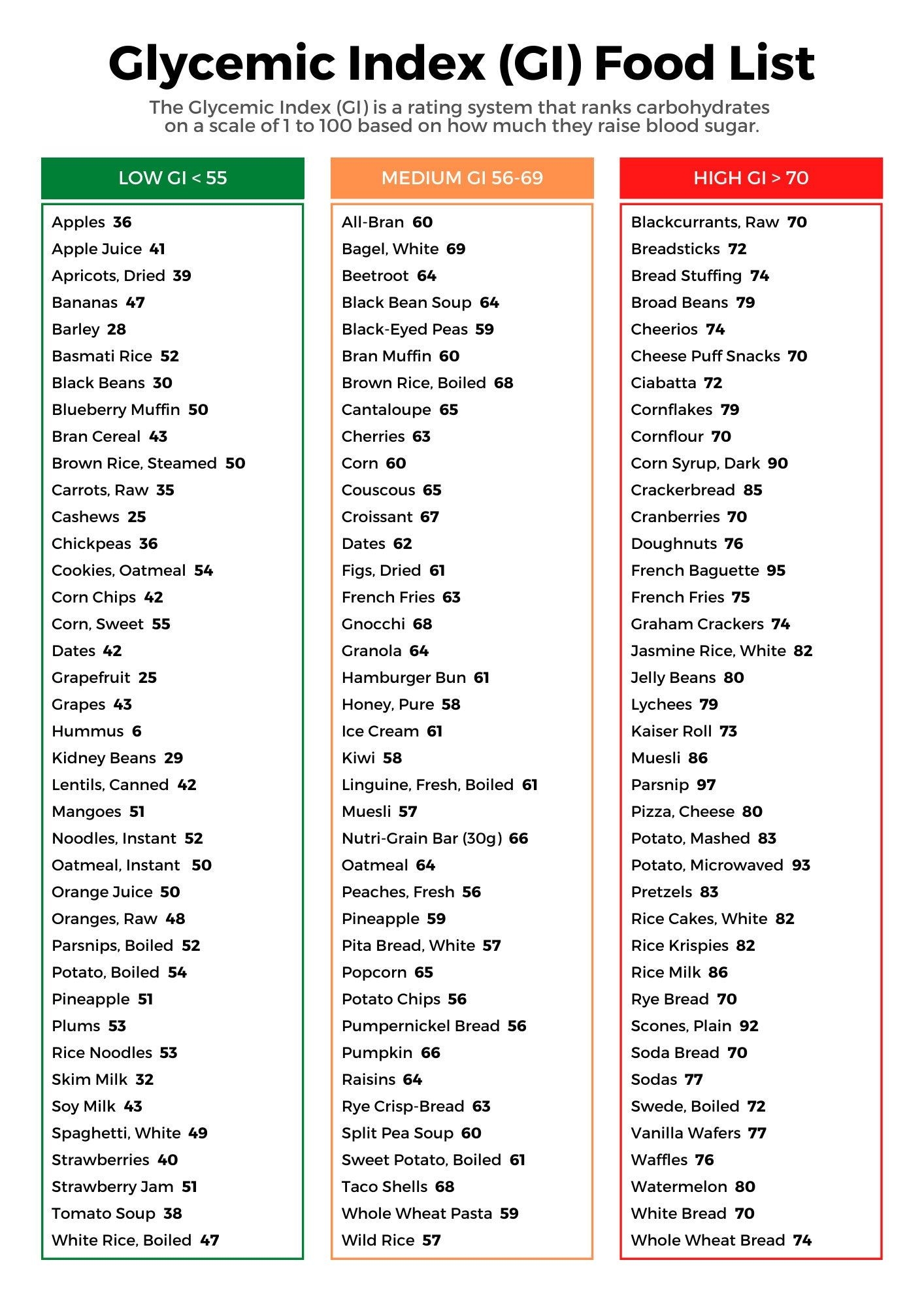
Low Glycemic Index Foods Chart
Here is a chart of some common low GI foods that you can easily incorporate into your daily meals:
| Food | GI Value |
|---|---|
| Quinoa | 53 |
| Green peas | 54 |
| Chickpeas | 33 |
| Apples | 38 |
| Carrots | 47 |
These are just a few examples of low GI foods that you can enjoy as part of a balanced diet. By incorporating a variety of these foods into your meals, you can help keep your blood sugar levels stable and promote better overall health.
It’s important to note that the GI value of a food can vary depending on how it is prepared and consumed. For example, cooking pasta al dente can lower its GI value compared to overcooking it. Additionally, pairing high GI foods with low GI foods can help balance out their effects on blood sugar levels.
Overall, incorporating low GI foods into your diet can have numerous health benefits and help you maintain better control over your blood sugar levels. By being mindful of the GI values of the foods you consume, you can make healthier choices that support your overall well-being.
Closing Thoughts
Consider adding more low GI foods to your diet to reap the benefits of stable blood sugar levels and improved overall health. With the help of this chart, you can easily identify which foods to include in your meals for a balanced and nutritious diet.