When it comes to 3D printing, choosing the right filament type is crucial for achieving the desired results. With a variety of options available in the market, it can be overwhelming to decide which filament is best suited for your project. Understanding the different types of filament and their properties can help you make an informed decision.
Each filament type has its own set of characteristics such as strength, flexibility, durability, and temperature resistance. Factors like cost, ease of use, and compatibility with your 3D printer also play a role in determining the most suitable filament for your needs.
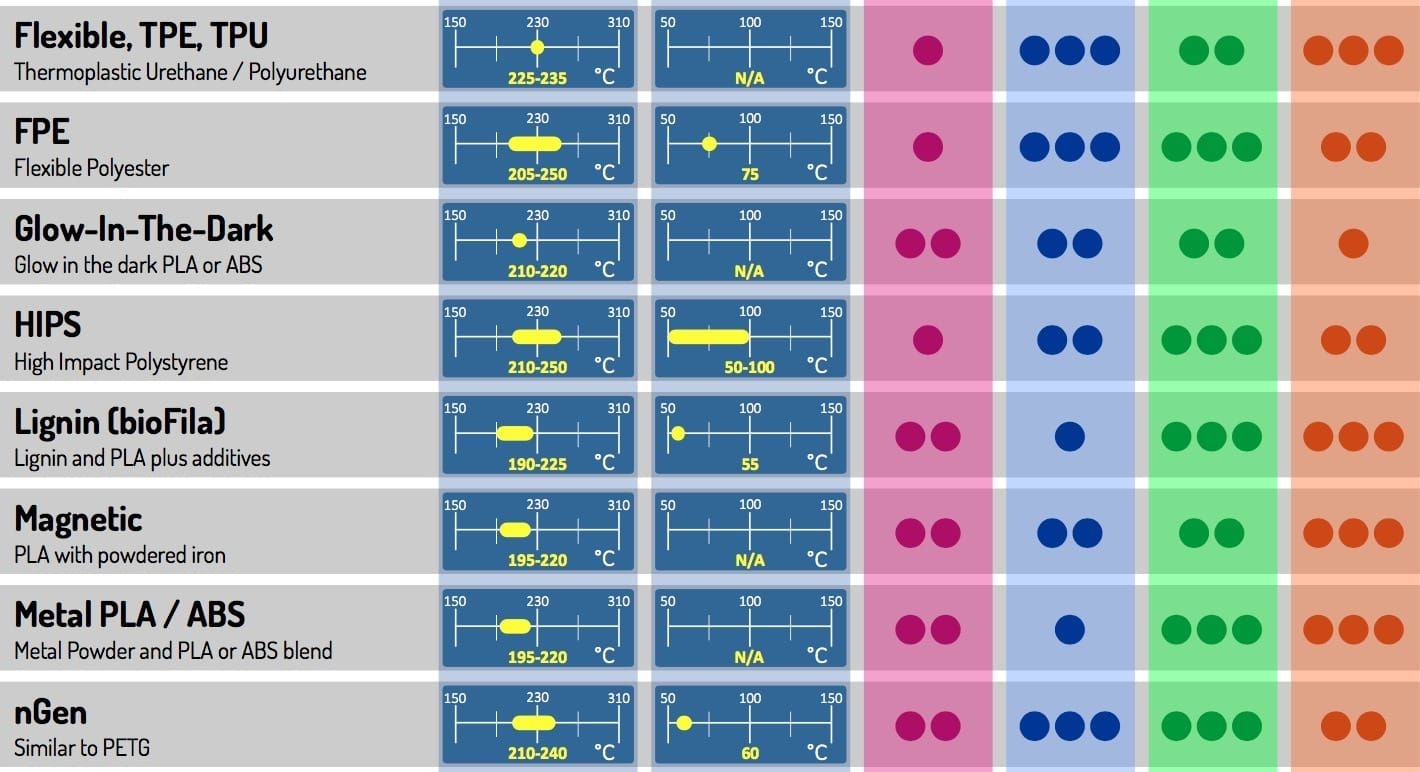
3D Printer Filament Types Chart
1. PLA (Polylactic Acid): PLA is one of the most popular filament types used in 3D printing. It is biodegradable, easy to print with, and comes in a wide range of colors. PLA is best suited for prototyping, decorative items, and models that do not require high temperature resistance.
2. ABS (Acrylonitrile Butadiene Styrene): ABS is known for its strength, durability, and impact resistance. It is ideal for functional parts, mechanical components, and objects that require high temperature resistance. However, ABS can be challenging to print with due to its tendency to warp.
3. PETG (Polyethylene Terephthalate Glycol): PETG combines the strength of ABS with the ease of printing of PLA. It has good impact resistance, flexibility, and chemical resistance. PETG is suitable for a wide range of applications including mechanical parts, prototypes, and food-safe objects.
4. TPU (Thermoplastic Polyurethane): TPU is a flexible filament that is ideal for printing objects that require elasticity and durability. It is commonly used for creating phone cases, shoe soles, and prosthetics. TPU is resistant to abrasion and oil, making it a versatile filament type.
5. Nylon: Nylon is a strong and durable filament that is suitable for producing parts that require high impact resistance and flexibility. It has excellent layer adhesion and is resistant to chemicals and abrasion. Nylon is often used in industrial applications such as gears, bearings, and functional prototypes.
Choosing the right filament type for your 3D printing project is essential for achieving the desired results. Consider the properties of each filament type, as well as your specific requirements, to select the most suitable option. Experimenting with different filament types can help you understand their strengths and limitations, allowing you to make informed decisions in the future.