Router bits come in a variety of shapes and sizes, each designed for specific woodworking tasks. Understanding the different profiles can help you choose the right bit for your project and achieve the desired results. Whether you’re a beginner or a seasoned woodworker, having a router bit profiles chart can be a helpful tool in your workshop.
1. Straight Bit: This is the most common type of router bit, used for cutting straight and flat-bottomed grooves, rabbets, and dadoes. It is also great for trimming and shaping edges.
2. Flush Trim Bit: This bit has a bearing on the top that rides along the edge of the material, allowing you to trim the edges flush with another piece of wood. It is ideal for pattern or template work.
3. Roundover Bit: This bit creates a rounded edge on the wood, perfect for softening sharp corners and edges. It is commonly used for decorative purposes and can give your project a professional finish.
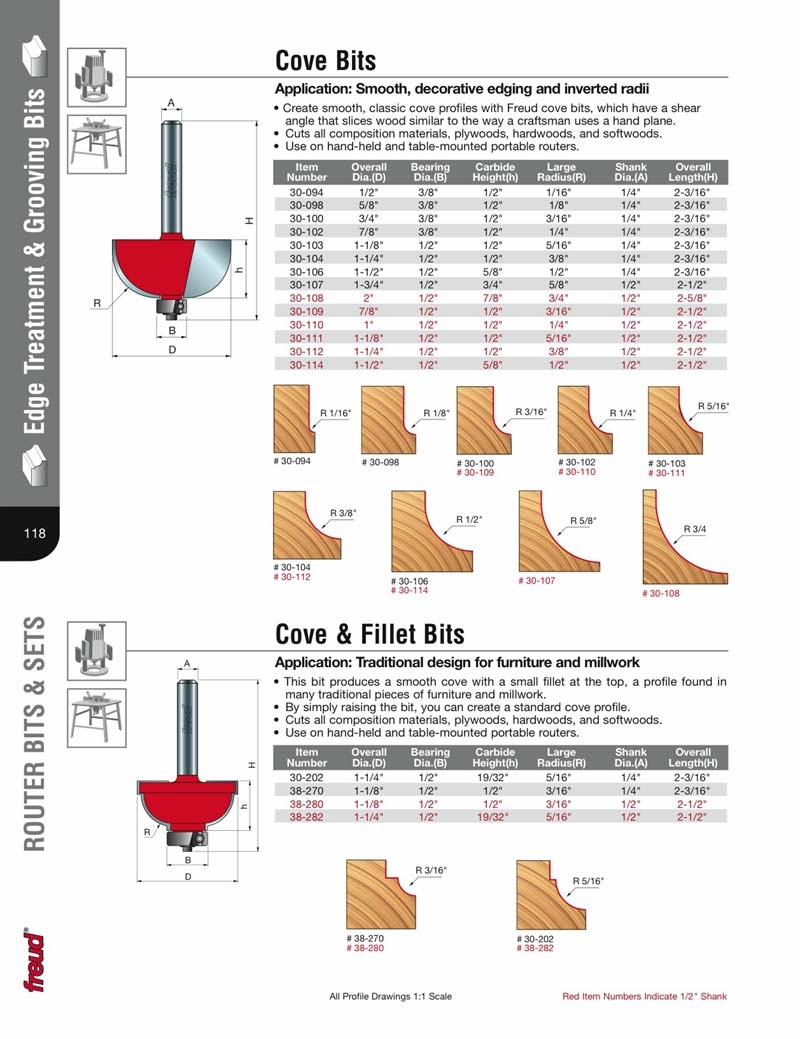
4. Cove Bit: The cove bit creates concave profiles in the wood, adding depth and dimension to your workpiece. It is often used for decorative molding and trim work.
5. Chamfer Bit: This bit creates a beveled edge on the wood, perfect for adding a decorative touch or creating angled edges. It is commonly used for furniture making and trim work.
Having a router bit profiles chart can help you identify the right bit for the job and ensure that you achieve the desired results in your woodworking projects. By understanding the different profiles and their uses, you can expand your woodworking skills and create beautiful pieces with precision and accuracy.
In conclusion, router bits come in a variety of profiles, each designed for specific tasks in woodworking. By referring to a router bit profiles chart, you can choose the right bit for your project and achieve professional results. Whether you’re a beginner or an experienced woodworker, having a good understanding of router bit profiles is essential for successful woodworking projects.