Resistors are electronic components that are used to resist the flow of electric current in a circuit. They come in various shapes and sizes, but one common way to identify their resistance value is through a color chart. Each color represents a specific number and multiplier, which when combined, give the resistance value of the resistor.
Understanding how to read the resistor color chart is essential for anyone working with electronics, as it helps determine the correct resistor to use in a circuit. By knowing the color code, you can easily identify the resistance value and tolerance of the resistor without the need for any additional tools.
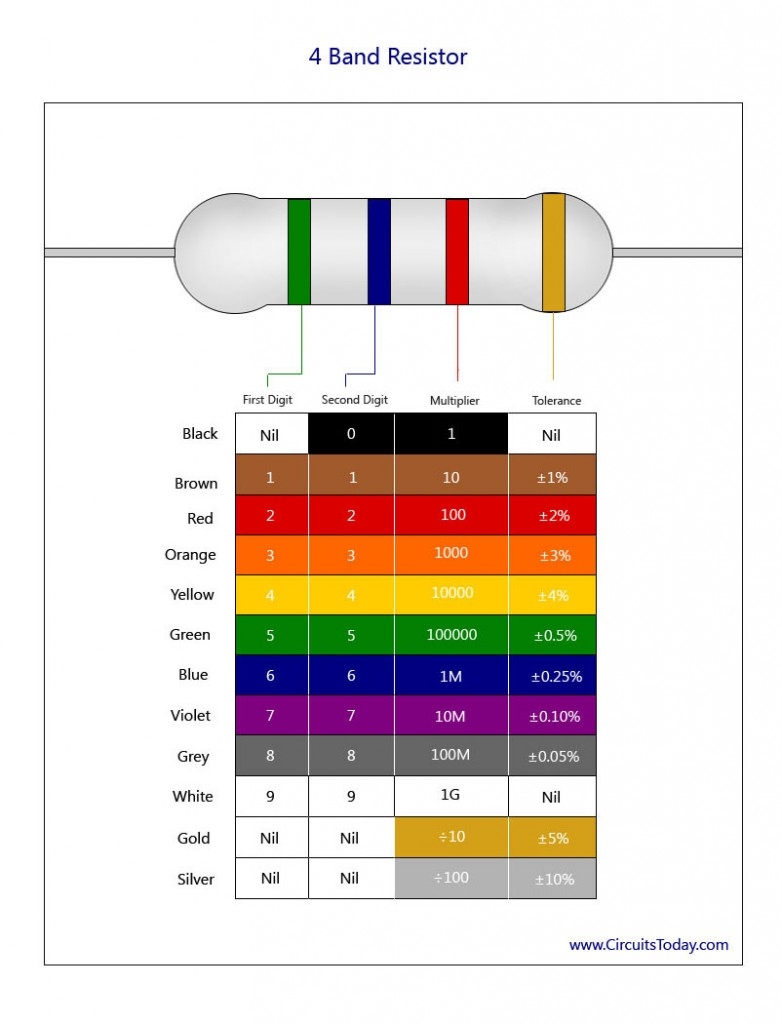
Resistors Color Chart
The resistor color chart consists of four or five color bands that are printed on the resistor body. Each color represents a number according to the following chart:
1. Black – 0
2. Brown – 1
3. Red – 2
4. Orange – 3
5. Yellow – 4
By reading the colors from left to right, you can determine the resistance value of the resistor. The first two colors represent the first and second significant digits, the third color represents the multiplier, and the fourth color (if present) represents the tolerance.
For example, if a resistor has the colors red, red, orange, and gold, the resistance value can be calculated as follows: 2 2 * 10^3 = 22000 ohms with a tolerance of +/- 5%.
It is important to note that not all resistors have the same color code, as there are different standards used by manufacturers. Therefore, it is essential to refer to the datasheet or packaging of the resistor to ensure the correct interpretation of the colors.
Overall, understanding the resistor color chart is a valuable skill for anyone working with electronics. By knowing how to read the colors on a resistor, you can easily determine its resistance value and tolerance, making it easier to select the right component for your circuit.