Spelling can be a tricky aspect of language learning, with many rules and exceptions to remember. However, having a clear understanding of spelling rules can greatly improve your writing skills and help you avoid common mistakes. One helpful tool for mastering spelling is a spelling rules chart, which outlines the key rules to follow when spelling words correctly.
By referring to a spelling rules chart, you can quickly check the correct spelling of words and ensure that you are following the established rules of the language. This can be especially useful for English language learners, as English spelling can be particularly challenging due to its many irregularities.
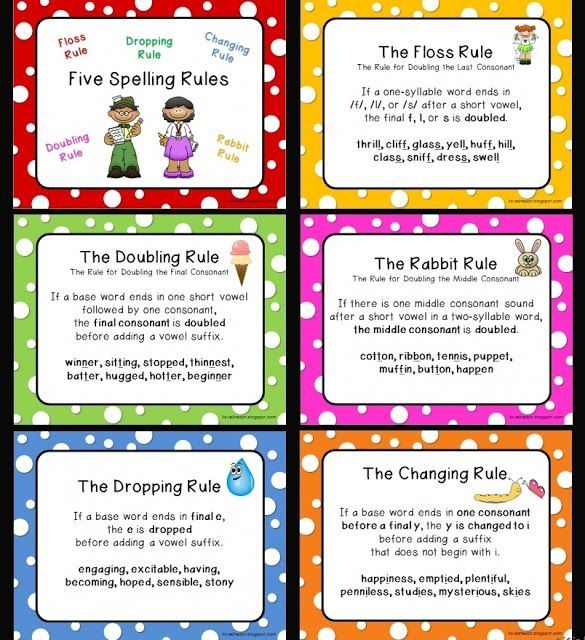
Spelling Rules Chart
1. I before E except after C: One of the most well-known spelling rules in English, this rule states that the letter “i” should come before “e” in words except after the letter “c.” For example, “believe” and “receive” follow this rule, while “science” and “efficient” do not.
2. Silent E rule: When adding a suffix to a word that ends in a silent “e,” the “e” is usually dropped. For instance, “hope” becomes “hoping” and “love” becomes “lovable.” However, there are exceptions to this rule, such as “dyeing” and “singeing.”
3. Doubling consonants: When adding a suffix to a word that ends in a single vowel followed by a single consonant, the consonant is usually doubled. For example, “run” becomes “running” and “hot” becomes “hotter.” However, this rule does not apply if the word ends in a vowel followed by “w,” “x,” or “y.”
4. Plurals and possessives: When forming plurals, most nouns simply add an “s” at the end. For possessives, an apostrophe is added before the “s” for singular nouns and after the “s” for plural nouns. For example, “cat” becomes “cats” in plural form and “cat’s” in possessive form.
5. Homophones: Words that sound alike but have different meanings and spellings can be confusing. Common examples include “there,” “their,” and “they’re.” Understanding the correct spelling of homophones is essential for accurate writing.
By familiarizing yourself with these spelling rules and referring to a spelling rules chart when needed, you can improve your spelling skills and avoid common mistakes. Practicing regularly and paying attention to spelling patterns will help you become a more confident and proficient speller.