Knowing your blood type is crucial in emergency situations where blood transfusions may be needed. Each blood type has specific antigens that determine compatibility with other blood types. Understanding your blood type can also provide valuable information about your health and potential risks for certain diseases.
There are four main blood types: A, B, AB, and O. Each of these types can also be positive or negative, depending on the presence of the Rh factor. This combination of blood type and Rh factor creates a total of eight possible blood types.
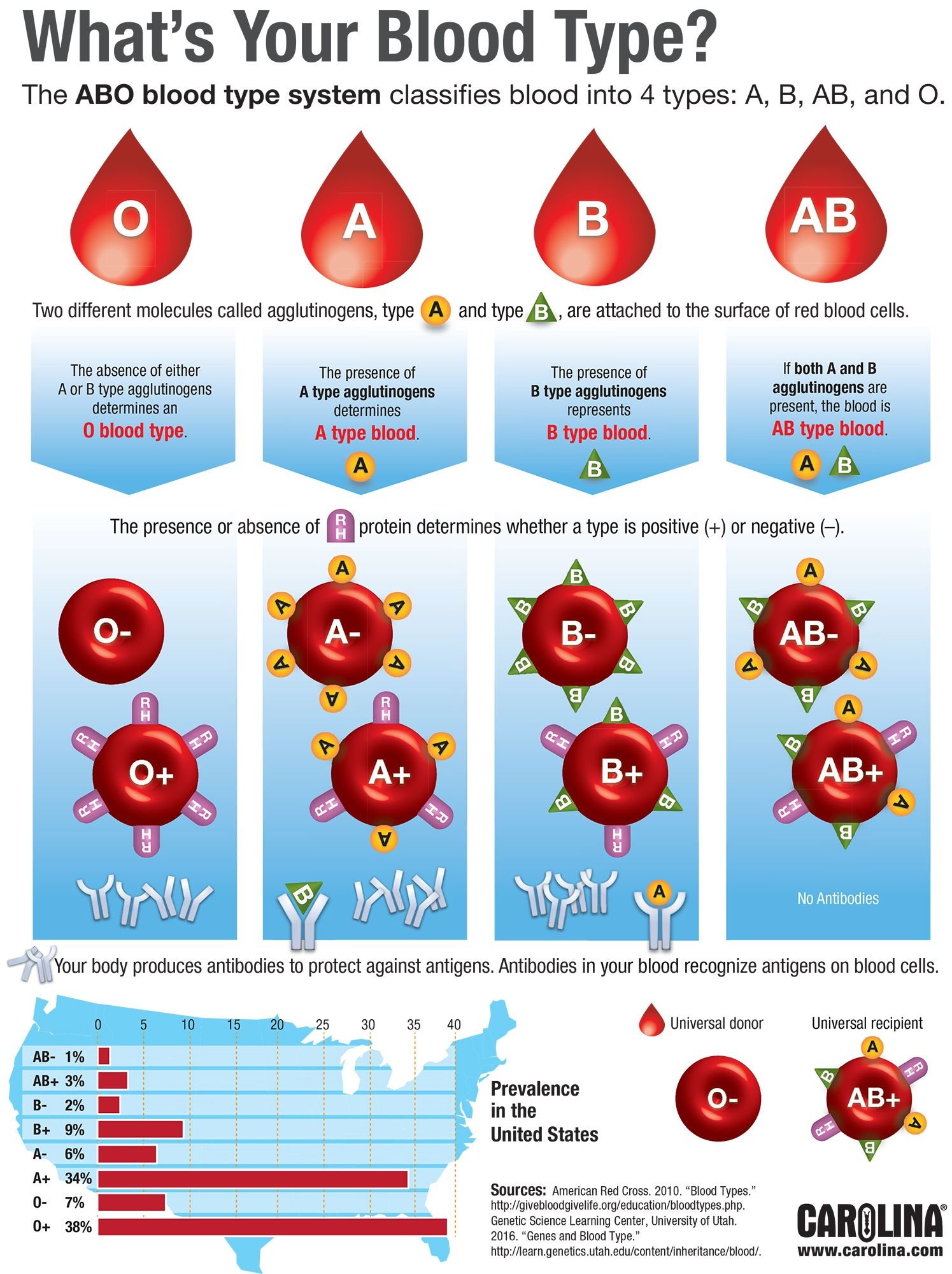
Blood Types Chart
Here is a chart outlining the different blood types and their compatibility:
| Blood Type | Can Donate To | Can Receive From |
|---|---|---|
| A+ | A+, AB+ | A+, A-, O+, O- |
| B- | B-, B+, AB+, AB- | B-, O- |
| AB+ | AB+ | All Blood Types |
| O- | All Blood Types | O- |
It is important to note that individuals with type O negative blood are considered universal donors, as their blood can be transfused to patients with any blood type. On the other hand, individuals with type AB positive blood are considered universal recipients, as they can receive blood from any blood type.
Understanding blood types is not only important in medical emergencies but can also provide insights into genetic traits and susceptibility to certain diseases. For example, individuals with type O blood are less likely to develop heart disease and have a lower risk of developing certain types of cancer.
In conclusion, having knowledge of your blood type can be life-saving in emergency situations and can provide valuable information about your health and well-being. By understanding the compatibility of different blood types and their implications, you can make informed decisions about your healthcare and potentially prevent certain health risks.