The Circle of 5ths is a fundamental concept in music theory that is essential for musicians to understand. It provides a visual representation of the relationships between the 12 different pitches in Western music and is a valuable tool for composers, songwriters, and performers.
By familiarizing yourself with the Circle of 5ths, you can easily determine key signatures, chord progressions, and scales. It can help you to transpose music, modulate between keys, and create harmonically rich compositions.
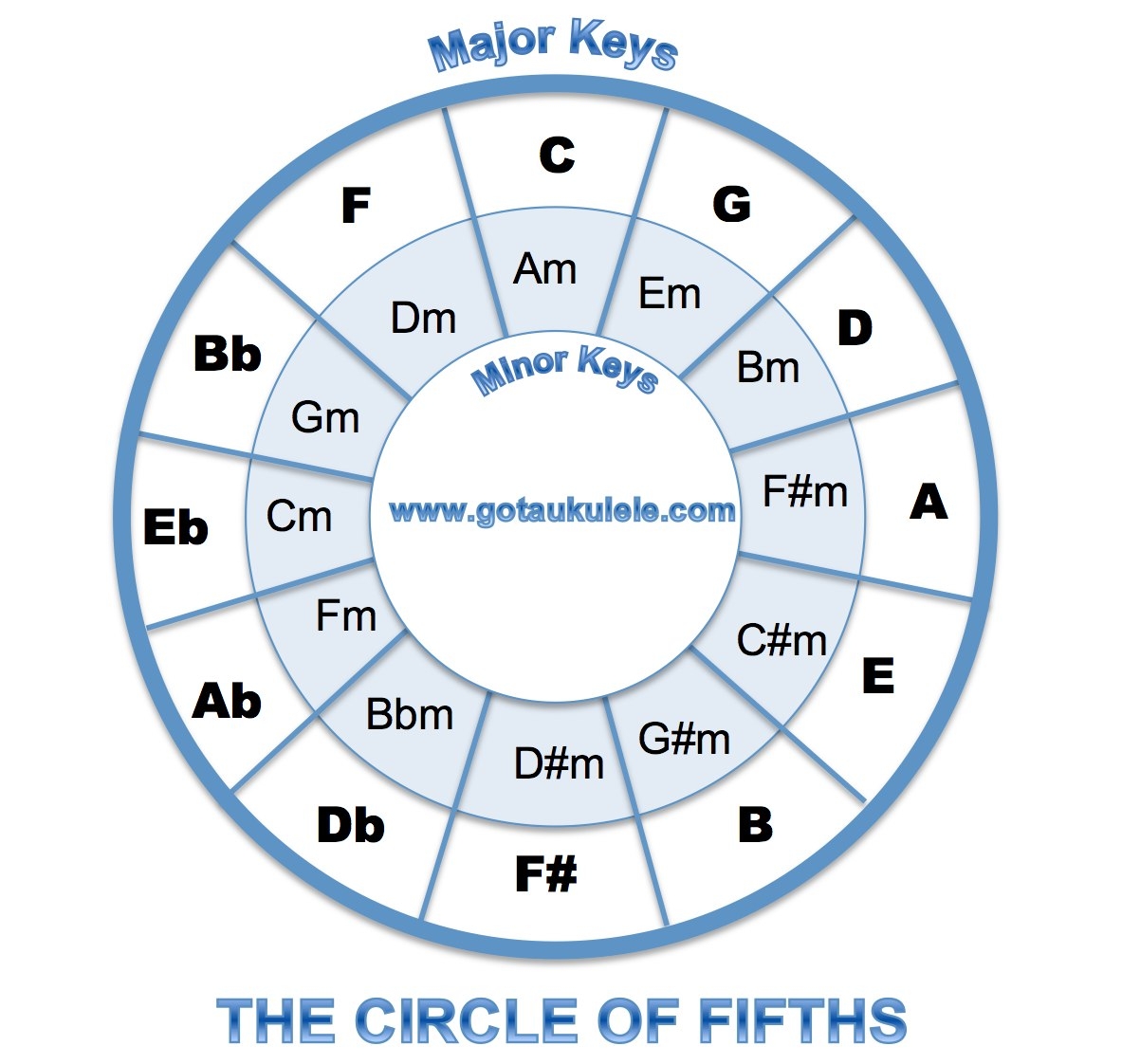
The Circle of 5ths Chart
The Circle of 5ths chart is a circular diagram that displays the 12 pitches of the chromatic scale in a clockwise progression of perfect 5ths. Each key is represented by a letter, with the major keys on the outer circle and the relative minor keys on the inner circle. The chart also shows the number of sharps or flats in each key signature.
Starting from C Major at the 12 o’clock position, each key is a perfect 5th interval apart from the previous key. Moving clockwise around the circle, you can see the progression of key signatures with increasing numbers of sharps or flats. This arrangement makes it easy to identify the relationships between keys and understand the principles of harmony and tonality.
Using the Circle of 5ths chart, you can quickly determine the key signature of a piece of music, identify chords that belong to a particular key, and navigate through chord progressions with ease. It can also help you to analyze harmonic relationships, identify common chord progressions, and make informed decisions about modulation and key changes in your compositions.
Overall, the Circle of 5ths is a powerful tool that can enhance your understanding of music theory and improve your skills as a musician. By mastering the relationships between keys and chords, you can become a more versatile and knowledgeable musician, capable of creating complex and harmonically rich compositions.
So, take the time to study the Circle of 5ths chart and explore its applications in your music practice. You’ll be amazed at how this simple diagram can revolutionize your approach to music theory and unlock new creative possibilities in your musical journey.