Body Mass Index (BMI) is a measurement used to determine whether a person is underweight, normal weight, overweight, or obese based on their height and weight. It is a simple and widely used tool to screen for possible health problems related to weight.
Calculating your BMI is easy and can provide valuable information about your overall health. By using a BMI height weight chart, you can see where you fall on the scale and take steps to improve your health if necessary.
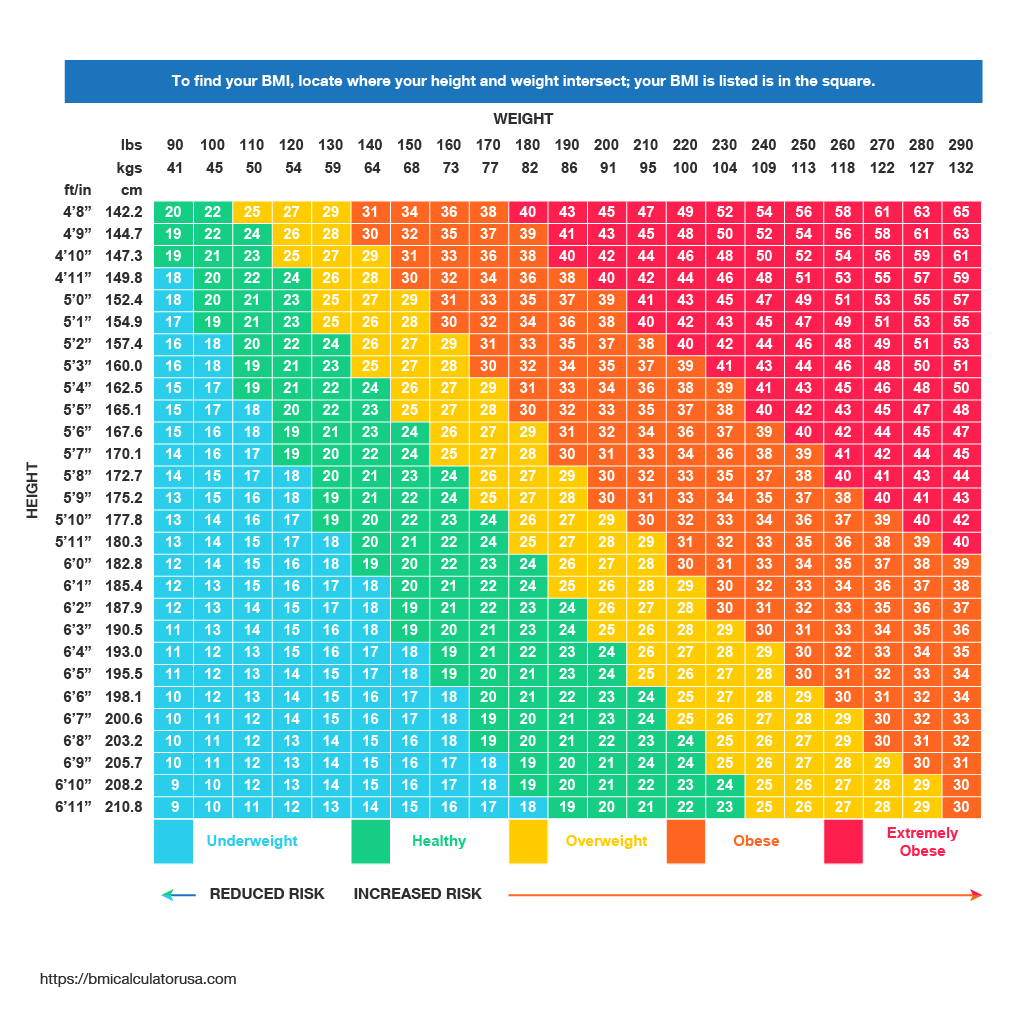
BMI Height Weight Chart
The BMI height weight chart typically consists of a grid that shows various ranges of BMI values corresponding to different heights and weights. By finding your height on the chart and then locating your weight, you can determine your BMI category.
For example, if you are 5’6″ tall and weigh 150 pounds, your BMI would fall into the “healthy weight” category. However, if you weigh 180 pounds, your BMI would place you in the “overweight” category.
It’s important to note that while BMI is a useful tool for screening, it does not directly measure body fat or muscle mass. Therefore, it is possible for individuals with high muscle mass to have a higher BMI but still be healthy.
Consulting with a healthcare provider can provide a more accurate assessment of your overall health and help determine if any lifestyle changes are necessary to improve your well-being.
By regularly monitoring your BMI and making healthy choices regarding diet and exercise, you can maintain a healthy weight and reduce your risk of obesity-related health issues such as diabetes, heart disease, and high blood pressure.
Remember, BMI is just one tool in assessing your health, and it’s essential to consider other factors such as physical activity levels, diet, and family history when evaluating your overall well-being. Use the BMI height weight chart as a starting point on your journey to better health.