Body Mass Index (BMI) is a widely-used tool to determine if a person is underweight, normal weight, overweight, or obese based on their height and weight. It is a simple and easy way to assess your body composition and identify potential health risks related to weight.
Understanding your BMI can help you make informed decisions about your health and take steps towards maintaining a healthy weight. By using a BMI chart, you can easily see where you fall on the scale and set realistic goals for yourself.
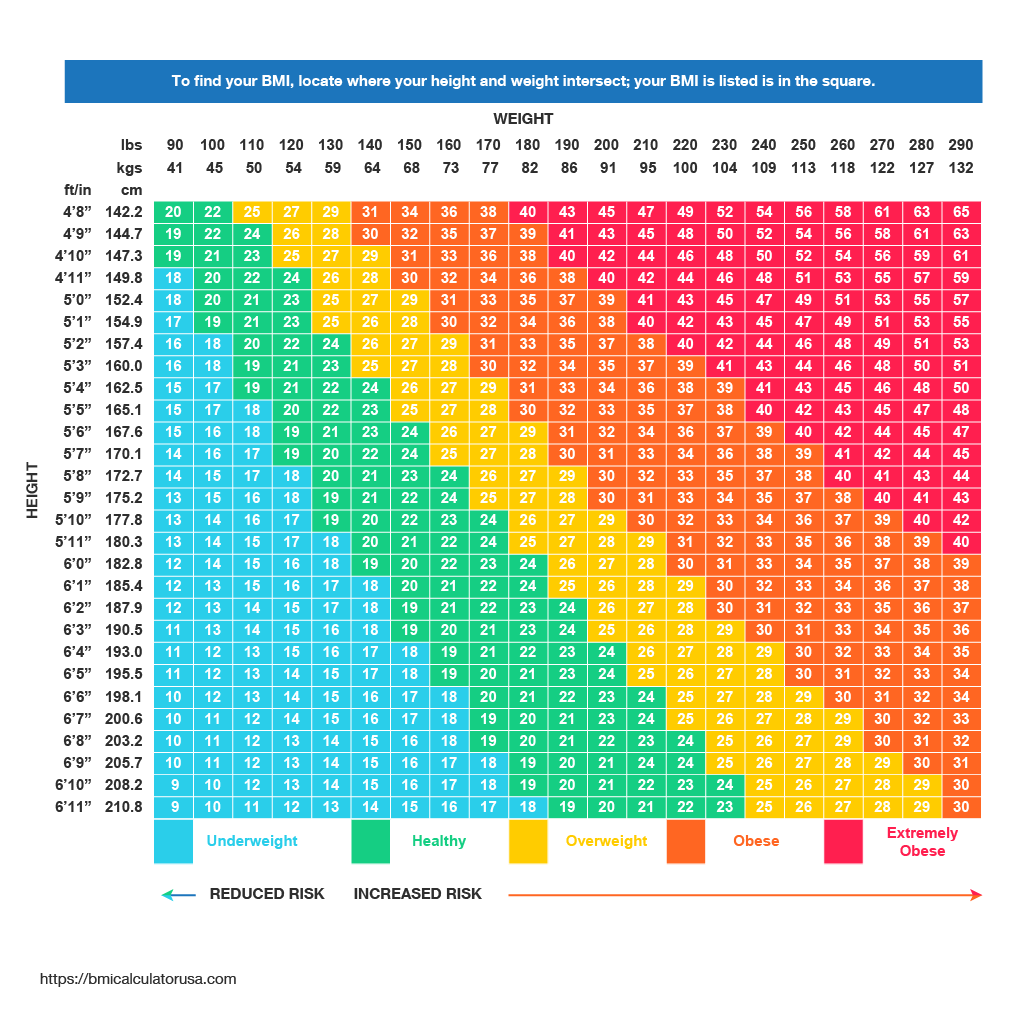
BMI Chart
A BMI chart typically consists of a range of BMI values and corresponding weight status categories. For example, a BMI of less than 18.5 is considered underweight, 18.5-24.9 is normal weight, 25-29.9 is overweight, and 30 or higher is obese. By finding your height and weight on the chart, you can quickly determine your BMI and what category you fall into.
It’s important to note that BMI is not a perfect measure of health, as it does not take into account factors such as muscle mass, bone density, or body composition. However, it is a useful tool for most people to get a general idea of their weight status and potential health risks.
If you find that your BMI falls into the overweight or obese category, it may be a sign that you need to make some changes to your lifestyle. This could include adopting a healthier diet, increasing physical activity, and seeking support from a healthcare professional or nutritionist.
On the other hand, if your BMI is in the underweight category, it may indicate that you need to focus on gaining weight in a healthy way. This could involve incorporating more nutrient-dense foods into your diet, building muscle through strength training, and speaking with a healthcare provider about your concerns.
Overall, using a BMI chart can be a helpful tool in assessing your weight and taking steps towards a healthier lifestyle. By understanding your BMI and making changes as needed, you can improve your overall health and reduce your risk of chronic diseases related to weight.