When it comes to choosing the right lighting for your home or office, understanding the relationship between watts and lumens is crucial. Watts measure the amount of energy used by a light bulb, while lumens measure the brightness of the light produced. By knowing how to convert watts to lumens, you can ensure that you are getting the right amount of light for your space.
Many people are used to thinking in terms of watts when it comes to buying light bulbs, but with the shift towards more energy-efficient lighting options like LED bulbs, it’s important to also consider lumens. This can help you choose the right bulb for the level of brightness you desire, regardless of its energy consumption.
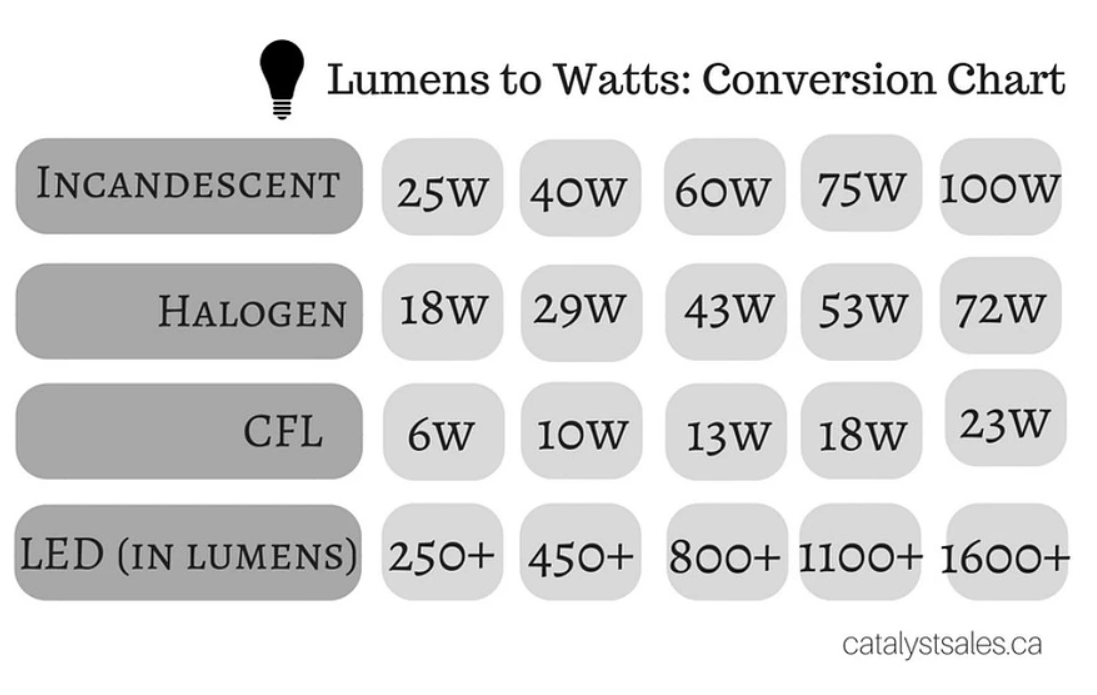
Conversion Chart: Watts to Lumens
Here is a general conversion chart to help you understand the relationship between watts and lumens:
| Watts | Lumens |
|---|---|
| 40 | 450 |
| 60 | 800 |
| 75 | 1100 |
| 100 | 1600 |
As you can see from the chart above, the higher the wattage of the bulb, the higher the lumen output. This means that a 100-watt bulb will produce more light (1600 lumens) than a 40-watt bulb (450 lumens).
It’s important to keep in mind that different types of bulbs, such as incandescent, CFL, and LED, may have different lumen outputs for the same wattage. This is why it’s always a good idea to check the packaging or product specifications when buying a new bulb to ensure you are getting the right level of brightness for your needs.
By understanding the relationship between watts and lumens, you can make informed decisions when it comes to lighting your space. Whether you are looking for a warm, cozy glow or a bright, energizing light, knowing how to convert watts to lumens can help you achieve the perfect ambiance.
Next time you’re shopping for light bulbs, refer back to this conversion chart to ensure you are getting the right amount of light for your space. Remember, it’s not just about the wattage – lumens play a crucial role in determining the brightness of your lighting.