Body piercing has become a popular form of self-expression and adornment in recent years. From ear piercings to belly button piercings, there are a wide variety of options to choose from. However, one important aspect to consider when getting a body piercing is the size of the jewelry. It is crucial to choose the right size to ensure proper healing and comfort.
Before getting a body piercing, it is essential to consult with a professional piercer who can help you choose the right size for your piercing. They will take into account factors such as the thickness of your skin, the location of the piercing, and your personal preferences. Having the right size jewelry can prevent complications such as migration, rejection, and discomfort.
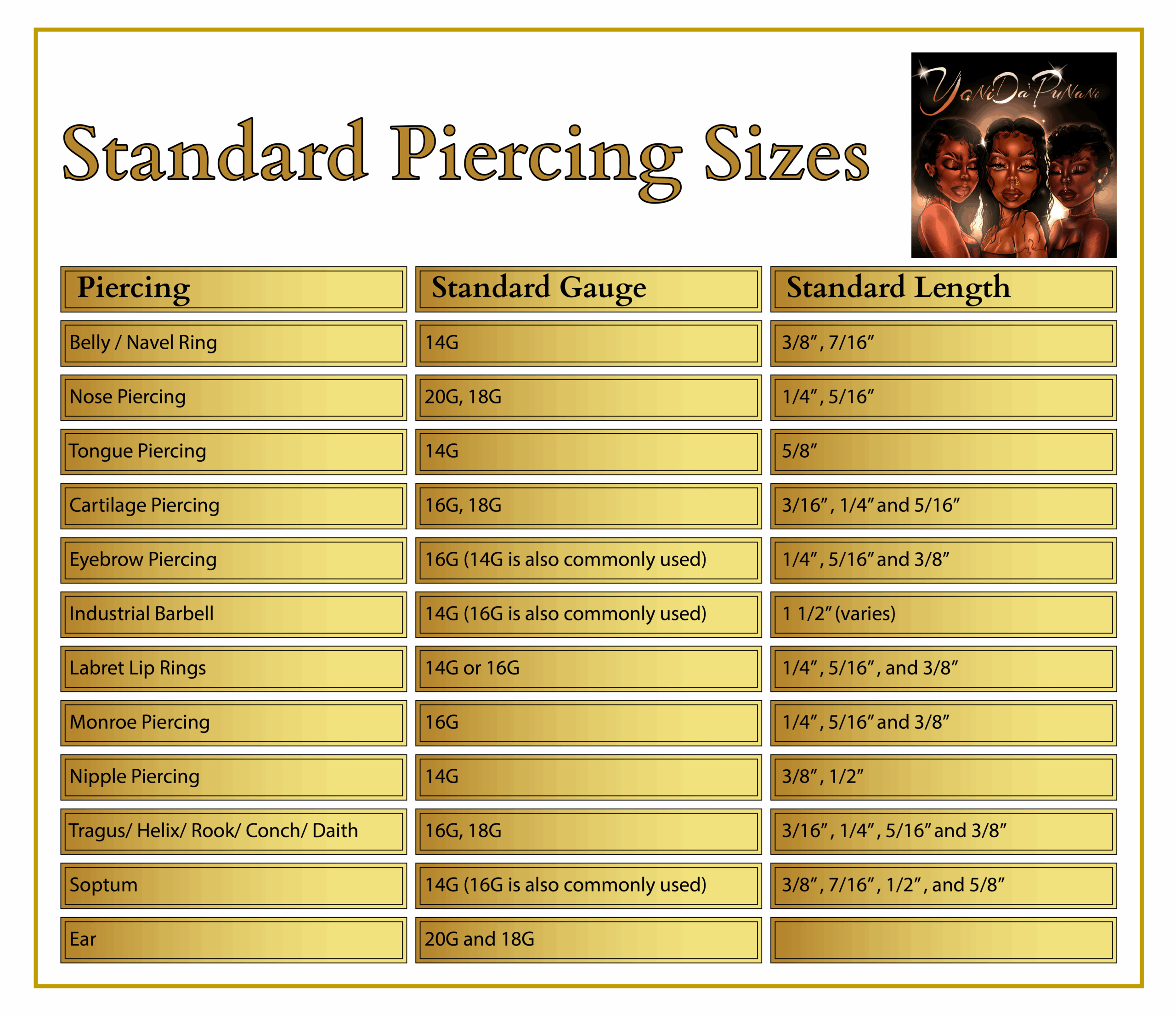
Here is a general body piercing size chart to give you an idea of the standard sizes for common piercings:
- Earlobe: 20 gauge (0.8mm) to 16 gauge (1.2mm)
- Cartilage: 16 gauge (1.2mm) to 14 gauge (1.6mm)
- Navel: 14 gauge (1.6mm) to 12 gauge (2.0mm)
- Lip: 16 gauge (1.2mm) to 14 gauge (1.6mm)
- Nose: 20 gauge (0.8mm) to 18 gauge (1.0mm)
It is important to note that these are just standard sizes and may vary depending on individual anatomy and personal preference. It is always best to consult with a professional piercer to determine the right size for your specific piercing.
When selecting jewelry for your body piercing, make sure to choose high-quality materials such as titanium, surgical steel, or gold. These materials are less likely to cause irritation or allergic reactions. Additionally, proper aftercare is crucial to ensure the healing of your piercing.
In conclusion, choosing the right size jewelry for your body piercing is essential for the overall success and comfort of your piercing. By consulting with a professional piercer and following proper aftercare instructions, you can enjoy your new piercing for years to come.