Glycemic Index (GI) is a scale that ranks carbohydrate-rich foods by how much they raise blood sugar levels. It is particularly useful for people with diabetes, as it helps them manage their blood sugar levels effectively. Understanding the GI of foods can also be beneficial for those looking to maintain a healthy diet and weight.
Low GI foods release glucose slowly into the bloodstream, providing a steady source of energy and keeping you feeling full for longer. On the other hand, high GI foods cause a rapid spike in blood sugar levels, leading to a crash in energy levels shortly after consumption.
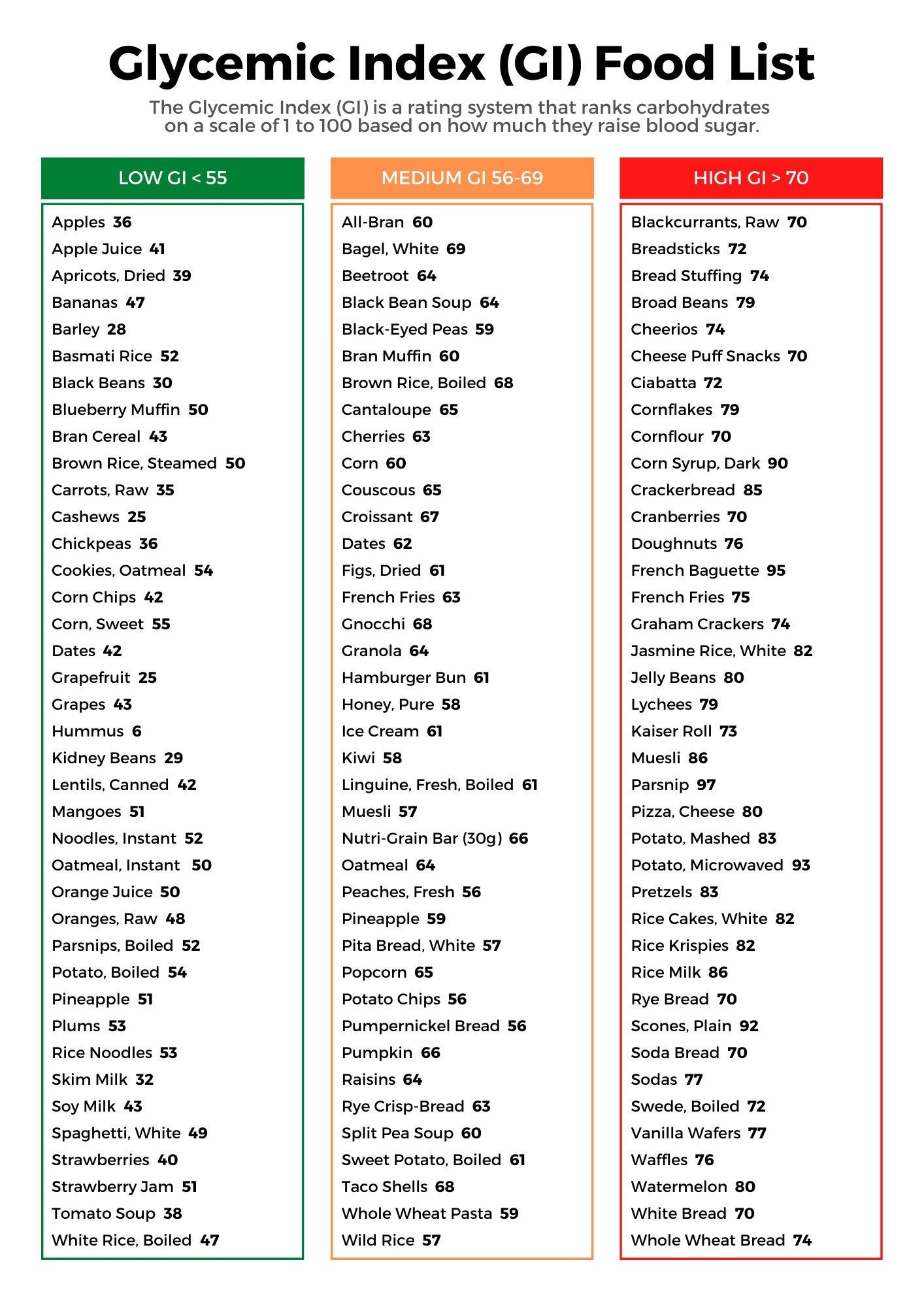
GI Foods Chart
Here is a simple GI foods chart to help you make better food choices:
| Food | GI Value |
|---|---|
| Apples | 38 |
| White Bread | 71 |
| Quinoa | 53 |
| Watermelon | 76 |
| Chickpeas | 28 |
It is important to note that the GI value of a food can vary depending on factors such as ripeness, cooking method, and processing. However, using a general GI foods chart can still guide you towards making healthier choices.
Include more low GI foods in your diet such as fruits, vegetables, whole grains, and legumes to help regulate blood sugar levels and improve overall health. Avoid or limit high GI foods like sugary drinks, white bread, and processed snacks to prevent spikes in blood sugar.
By incorporating the GI foods chart into your meal planning, you can make informed choices that support your overall well-being and energy levels throughout the day.
Remember, a balanced diet that includes a variety of low GI foods is key to maintaining stable blood sugar levels and promoting long-term health.