Fiber is an essential nutrient that plays a crucial role in maintaining good digestive health. It helps to regulate bowel movements, lower cholesterol levels, and control blood sugar levels. Despite its importance, many people do not consume enough fiber in their diets, leading to various health issues.
One way to ensure you are getting enough fiber in your diet is by incorporating fiber-rich foods into your meals. A fiber chart can help you identify which foods are high in fiber and make it easier for you to plan your meals accordingly.
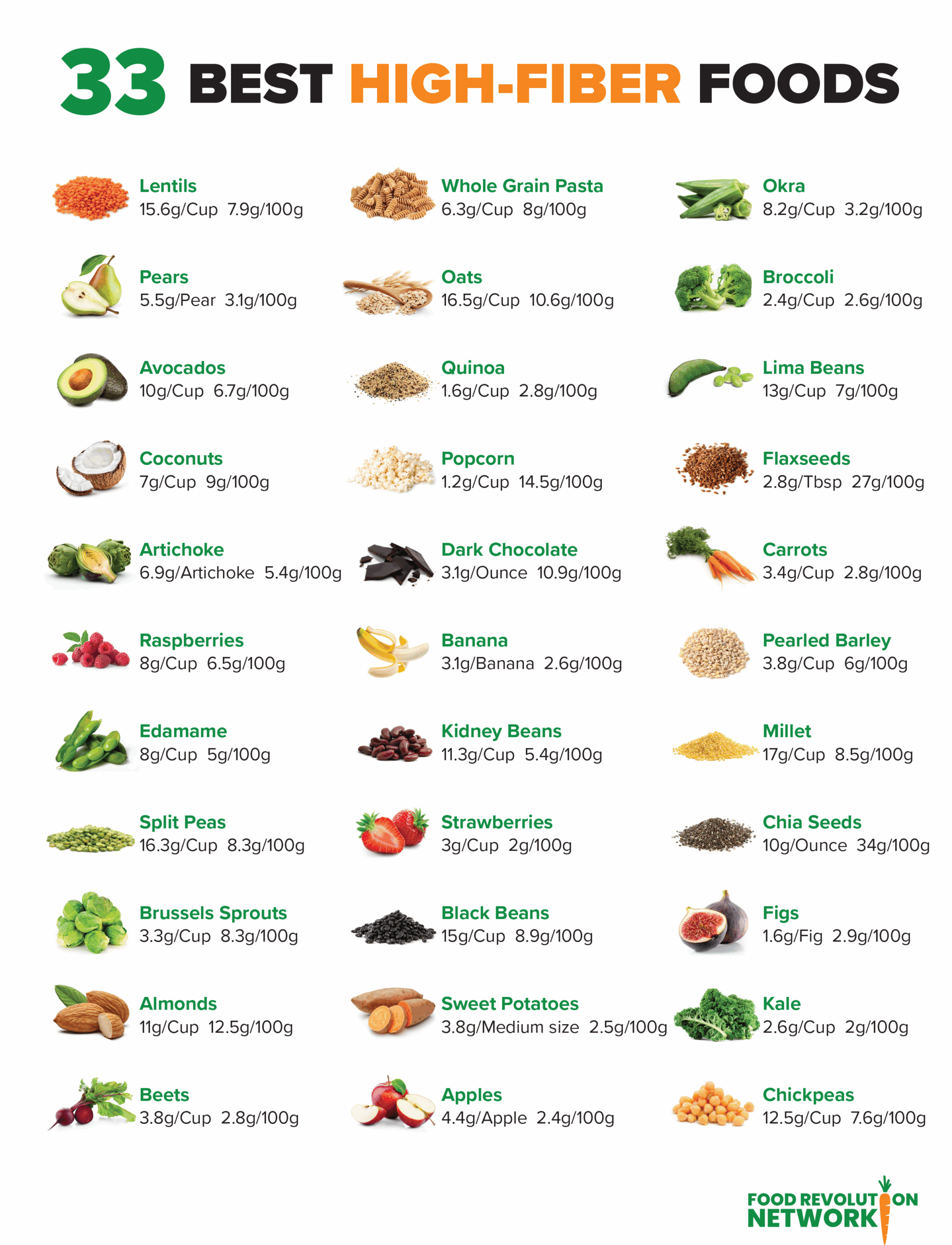
Fiber Chart Food
Some of the best sources of fiber include fruits, vegetables, whole grains, legumes, and nuts. These foods are not only high in fiber but also packed with essential vitamins, minerals, and antioxidants that are beneficial for overall health.
For example, berries such as raspberries, blackberries, and strawberries are excellent sources of fiber. One cup of raspberries contains about 8 grams of fiber, while one cup of blackberries provides around 7.6 grams of fiber. These fruits can be easily added to your breakfast cereal, yogurt, or smoothies to increase your fiber intake.
Vegetables like broccoli, Brussels sprouts, and artichokes are also rich in fiber. One cup of cooked broccoli contains about 5 grams of fiber, while one cup of cooked Brussels sprouts provides around 6 grams of fiber. Adding these vegetables to your meals can help you meet your daily fiber requirements.
Whole grains such as oats, quinoa, and brown rice are another excellent source of fiber. One cup of cooked quinoa contains about 5 grams of fiber, while one cup of cooked brown rice provides around 3.5 grams of fiber. These grains can be used as a base for salads, soups, or stir-fries to increase your fiber intake.
By including a variety of fiber-rich foods in your diet, you can improve your digestive health, lower your risk of chronic diseases, and maintain a healthy weight. Be sure to refer to a fiber chart to help you identify which foods are high in fiber and incorporate them into your meals regularly.
Remember to drink plenty of water when increasing your fiber intake to prevent constipation and promote optimal digestion. With a balanced diet rich in fiber, you can enjoy better overall health and well-being.