Golf wedges are an essential part of any golfer’s bag, as they are used for short-distance shots around the green. These clubs come in a variety of lofts and bounce angles, making it important to know how far each wedge can hit the ball. Understanding the distances each wedge can cover can help improve your accuracy and precision on the course.
Whether you are a beginner or a seasoned golfer, having a golf wedges distance chart can be beneficial in determining which club to use for specific shots. Knowing the distances each wedge can cover can help you make better club selections and improve your overall performance on the course.
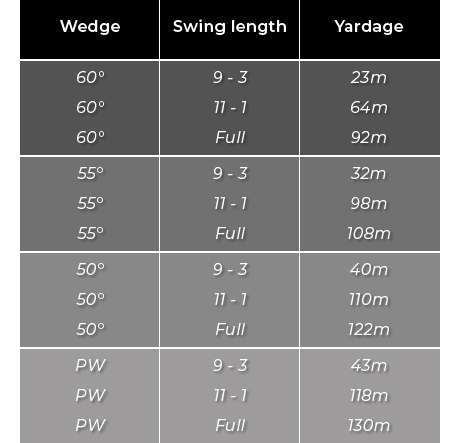
Distance Chart:
Below is a general golf wedges distance chart that can serve as a guide for most golfers:
| Wedge | Distance (yards) |
|---|---|
| Pitching Wedge (PW) | 100-120 |
| Gap Wedge (GW) | 90-110 |
| Sand Wedge (SW) | 80-100 |
| Lob Wedge (LW) | 60-80 |
It is important to note that these distances are approximate and can vary depending on factors such as swing speed, ball trajectory, and course conditions. It is recommended to practice with each wedge to determine your own distances and improve your accuracy on the course.
When using the golf wedges distance chart, consider the shot you are facing and the distance to the pin. Selecting the right wedge for the shot can help you get closer to the hole and potentially save strokes on your round. Practice with each wedge to become more comfortable with their distances and improve your overall game.
In conclusion, having a golf wedges distance chart can be a valuable tool for golfers looking to improve their short-game performance. Understanding the distances each wedge can cover can help you make better club selections and improve your accuracy and precision on the course. Use the chart as a guide, but also practice with each wedge to determine your own distances and become a more confident and skilled golfer.