Resting heart rate is the number of times your heart beats per minute while at rest. It is an important indicator of your overall cardiovascular health. A normal resting heart rate can vary based on factors such as age, fitness level, and genetics.
Monitoring your resting heart rate can help you track changes in your fitness level and overall health. It can also help you identify potential health issues such as high blood pressure, heart disease, or overtraining.
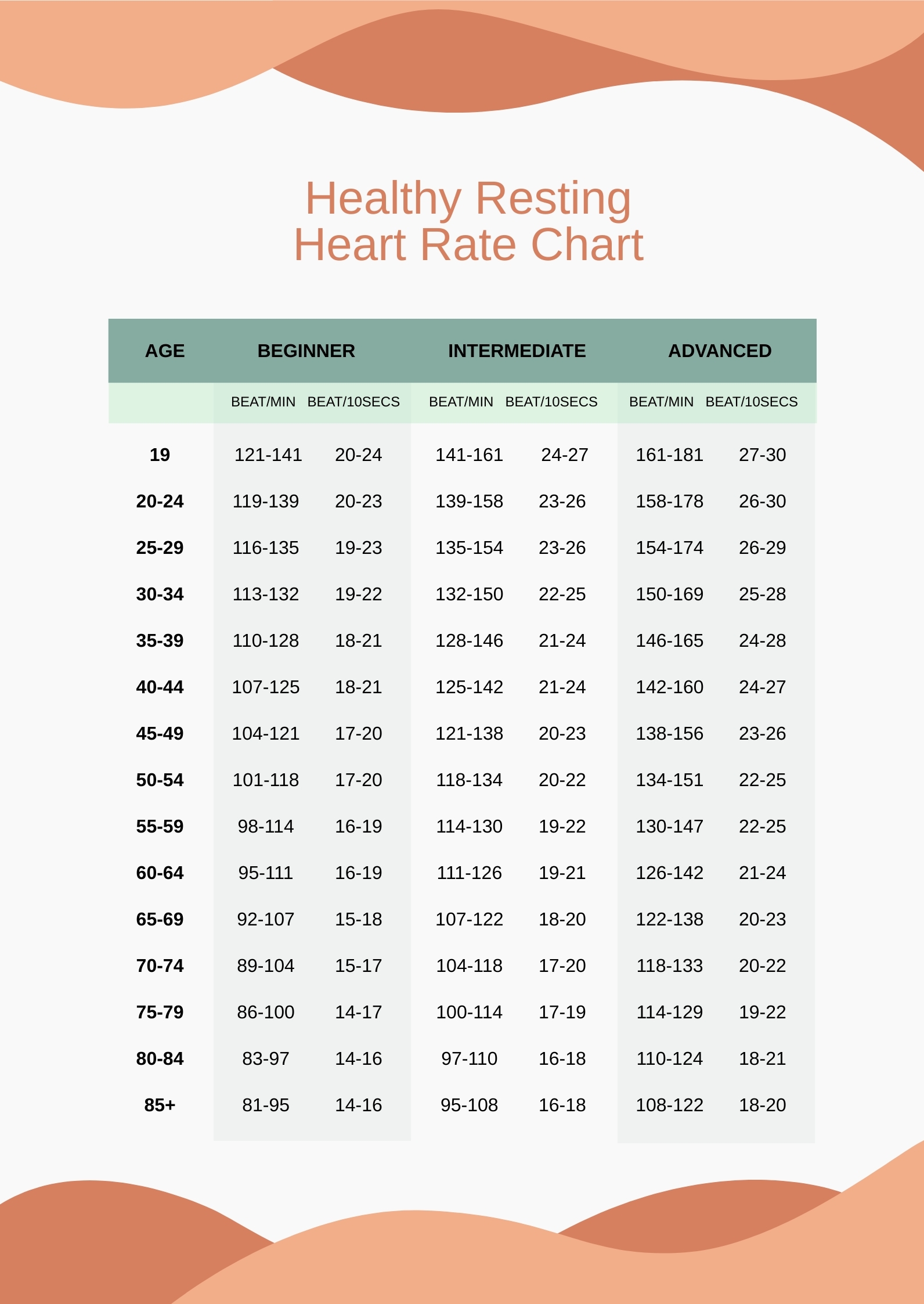
Resting Heart Rate Chart by Age
Here is a general guideline for resting heart rates by age:
| Age | Resting Heart Rate (beats per minute) |
|---|---|
| 0-1 year | 100-160 |
| 1-2 years | 90-150 |
| 3-4 years | 80-140 |
| 5-6 years | 75-130 |
| 7-9 years | 70-120 |
As you can see, resting heart rate tends to decrease as we age. However, individual variations are common, and factors such as fitness level and genetics also play a role in determining resting heart rate.
It’s important to note that resting heart rate can be influenced by external factors such as stress, caffeine, and medications. It’s best to measure your resting heart rate first thing in the morning, before getting out of bed.
If you notice a sudden increase or decrease in your resting heart rate, or if it falls outside the normal range for your age group, consult a healthcare professional for further evaluation.
Conclusion
Monitoring your resting heart rate is a simple yet effective way to track your overall health and fitness level. By understanding the normal range for your age group and paying attention to any changes, you can take proactive steps to maintain a healthy heart.